Last Updated: November 12, 2026
Quick Summary
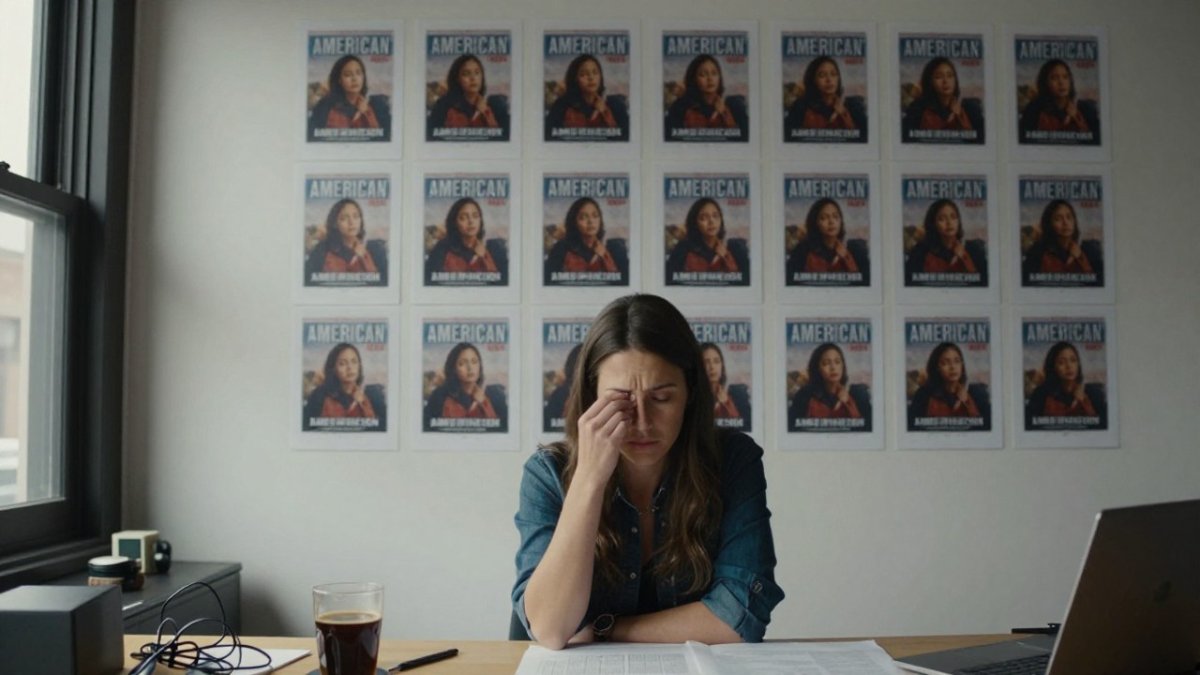
Creative fatigue is the drop in ad performance that happens when your audience has seen the same creative too many times, and it shows up first as falling CTR with steady impressions and rising frequency. Three or more of these signs moving together over the same reporting period is a diagnosis, not a hint. Fix it by rotating new hooks, visuals or headlines in alongside the winning ad instead of resetting the ad set.
- CTR and frequency move first, cost metrics second, and conversion metrics last.
- Three consecutive weeks of rising frequency inside the same audience is the pattern that matters.
- Judge trends over three to four weeks in small markets like Slovenia, not three to four days.
- Change one variable per variation so the next refresh starts from evidence.
- Static ads tend to fatigue fastest, with a two-to-three-week rotation common.
Table of Contents
- What Ad Creative Fatigue Actually Looks Like in Your Ad Account
- 7 Ad Creative Fatigue Signs to Check This Week
- Sign 1: Click-Through Rate Slides While Impressions Hold
- Sign 2: Frequency Climbs Past Your Baseline
- Sign 3: CPM Rises Without a Seasonal Reason
- Sign 4: Cost per Result and CPA Drift Upward
- Sign 5: Conversion Rate Falls on the Same Landing Page
- Sign 6: Engagement Signals Go Quiet
- Sign 7: Video Completion Rate Drops Off a Cliff
- The Ad Creative Performance Metrics That Reveal Fatigue First
- Creative Fatigue vs. Audience Saturation vs. a Broken Funnel
- How to Refresh Ad Creatives Without Resetting Learning
- Creative Testing for Ecommerce Ads: A Rotation That Works
- UGC Ad Creative Examples Worth Copying (and What They Fix)
- Book a Free Creative and Store Audit
- Frequently Asked Questions
What Ad Creative Fatigue Actually Looks Like in Your Ad Account
Ad creative fatigue is the drop in ad performance that happens when your audience has seen the same creative too many times.
Nothing breaks. Performance just erodes week by week until someone checks the numbers.
Below, we'll show you how to spot the seven ad creative fatigue signs, tell them apart from other problems, and refresh creative without wrecking campaign learning.
7 Ad Creative Fatigue Signs to Check This Week
These seven signs rarely appear alone. One is a hint. Three together, over the same reporting period, is a diagnosis. Check each against your own baseline, not an industry average.
Sign 1: Click-Through Rate Slides While Impressions Hold
Falling CTR with steady impressions is the cleanest early signal. Your audience still sees the ads, but fewer people click. That gap means the creative has stopped earning attention, not that delivery has stalled.
Pull a four-week view. If CTR drops while reach and impressions stay flat, the problem is the creative, not the budget.
Sign 2: Frequency Climbs Past Your Baseline
Every account has a normal frequency range. When that number keeps climbing inside the same audience, you are paying to repeat yourself.
Rising frequency plus falling CTR is the classic pair. Audience saturation is the cause; weak creative is the symptom that shows first.
Sign 3: CPM Rises Without a Seasonal Reason
Higher CPM usually means one of two things: more competition for the same audience, or weaker engagement pulling your quality signals down. Check the calendar first. Q4 and major sale periods push CPM up for everyone.
If CPM rises in a quiet month with no auction pressure, treat it as an ad creative performance signal.
Sign 4: Cost per Result and CPA Drift Upward
CPA creeps up before it spikes. A slow rise over two to three weeks, on unchanged targeting and budget, points to creative decline.
Compare cost per result against your own baseline, not last quarter's best week, on a fixed reporting period.
Sign 5: Conversion Rate Falls on the Same Landing Page
A falling conversion rate on an unchanged page is a message match problem. The ad promised something the page no longer delivers well, or the audience arriving is different from the one the page was built for.
Before you rewrite the page, check which ad the drop aligns with. If it follows one ad set, fix the creative. For a deeper walkthrough, see our guide to aligning ad creative with landing pages.
Sign 6: Engagement Signals Go Quiet
Comments, saves, shares and watch time all soften as creative ages. These engagement signals are noisy on small budgets, so read them as a trend, not a single week.
One quiet week means nothing. Four quiet weeks across the same ad variation means the audience has moved on.
Sign 7: Video Completion Rate Drops Off a Cliff
Video completion rate is the least forgiving metric in the set. A sharp fall means viewers drop out early, and the hook is no longer working.
Static creative is often the fastest fix here. For a deeper playbook, see our guide on how to create static ad creative that scales on Meta. Our team can produce static ads, UGC and video on a fixed monthly output if you need volume without rebuilding your pipeline.
The Ad Creative Performance Metrics That Reveal Fatigue First
CTR and frequency move first. Cost metrics move second.

Most guides tell you which metrics to watch. Fewer tell you how to read them in sequence. Here is the order we use.
1. Frequency, week over week, by ad set. Frequency is the earliest honest signal because it measures repetition directly.
2. CTR against a rolling baseline. Compare this week's CTR to a four-week rolling average for the same ad, not last quarter's best week.
**3.
**4.
**5. When the three-second hook holds but viewers drop before the payoff, test whether the pacing or message is wearing thin, and use Social Climbers to trace the same friction through TikTok conversion signals.
A repeatable weekly check. Pull one view each week containing: frequency by ad set, CTR against a four-week rolling baseline, CPM with a note on seasonal auction pressure, cost per result and CPA on the same reporting period, and video completion rate at the three-second and full-view marks. To connect creative testing to revenue, see how to measure creative testing's impact on sales.
Creative Fatigue vs. Audience Saturation vs. a Broken Funnel
These three problems look alike in a dashboard and need different fixes. Getting the diagnosis wrong wastes budget and time.
Creative fatigue is the audience tiring of one specific ad. Fix it by rotating in new visuals, headlines or hooks.
Audience saturation is the audience itself running out of new buyers.
A broken funnel is a store or page problem. Creative has no effect on it at all.
Use this to separate them:
| Symptom | Likely cause | First fix |
|---|---|---|
| CTR falls, impressions steady | Creative fatigue | Replace the ad variation |
| Frequency high, reach flat | Audience saturation | Widen or rebuild the audience |
| CTR fine, conversion rate down | Funnel problem | Audit the landing page |
| All metrics fall at once | Tracking or delivery issue | Check events and attribution |
| CPM up in a peak month | Seasonal auction pressure | Wait, then re-baseline |
A common mistake is refreshing creative when the real problem is a slow store.
How to Refresh Ad Creatives Without Resetting Learning
Replacing a winning ad too early throws away the learning it earned.
The refresh priority order. When a sign of fatigue appears, work down this list rather than rebuilding everything at once:
- Hook first. The first one to three seconds of a video, or the first line of static copy, carries most of the attention decision. If completion rate at three seconds has fallen, the hook is the problem. Change the opening frame or first line before touching anything else.
- Visual second. If the hook holds but CTR slides, the visual is no longer stopping the scroll. Swap the image or opening shot while keeping the same message.
- Copy third. If the visual still earns clicks but conversion rate on the landing page falls, the message match is off. Rewrite the headline and primary text to match what the page delivers.
- Offer fourth. If clicks and page views are healthy but cost per result climbs, the offer itself may have lost its edge. A different incentive, bundle, or framing can revive a tired ad set without new production.
- Format last. Only move to a new format, static to video, studio to UGC, when the existing format has been tested through the steps above. Format changes are the most expensive and slowest to read.
Change one variable at a time. If you swap the visual, the headline and the offer together, you learn nothing about which one worked.
How to run the swap without resetting learning.
- Keep the winning ad live until a replacement proves itself.
- Build two or three new variations with a different hook, visual or headline, one variable changed per variation.
- Launch them in the same ad set so learning stays in one place.
- Give each variation enough spend to produce a readable result before judging it.
- Retire the weakest variation, not the whole set.
- Log what changed and what the result was, so the next refresh starts from evidence.
Watch out: pausing every ad in an ad set to "start fresh" resets learning and pushes you back into the learning phase.
Refresh cadence by format. Static ads tend to fatigue fastest because there is less to hold attention; a two-to-three-week rotation is common.
What to prepare before you need it. The brands that refresh smoothly keep a small bank of ready variations, a few alternate hooks, a couple of visual treatments, one or two offer framings, so a refresh is a swap, not a production sprint. Our team produces static ads, UGC and video on a fixed monthly output, so there is always something ready to rotate in.
Creative Testing for Ecommerce Ads: A Rotation That Works
A rotation beats a one-off refresh. Set a rhythm, and creative fatigue stops being a surprise.
We use a simple structure for ecommerce brands:
- One control ad that stays live as the benchmark
- Two challengers testing new hooks or formats
- One wildcard testing a different angle entirely, such as UGC against studio creative
Rotate challengers every two to three weeks, or sooner if a sign from the list above appears. Keep the control until a challenger beats it across a full reporting period.
Deciding what to rotate in next is the hard part. Our breakdown of UGC versus studio creative on Meta covers what tends to convert in each format.
UGC Ad Creative Examples Worth Copying (and What They Fix)
UGC ad creative works because it looks like content, not advertising. Here are patterns worth copying, and the fatigue sign each one fixes.
- The unboxing open. A real customer opening the product on a phone camera. Fixes a dead hook in video ads.
- The problem-first testimonial. The customer names the problem before showing the product. Fixes weak engagement signals.
- The side-by-side demo. Two products or two results in one shot. Fixes falling CTR on static ads.
What most guides miss is that UGC needs the same testing discipline as studio creative. A fresh UGC ad can fatigue just as fast if you run it to the same audience for a month.
Book a Free Creative and Store Audit
Creative fatigue is easier to fix once you know which of the seven signs you are seeing. The harder question is whether the drop sits in your ads, your audience or your store.
If you are not sure which one it is, we can tell you.
Get started with Conversion Design and find out whether your next move is a new ad or a new page.
Frequently Asked Questions
What are the first signs of ad creative fatigue?
The earliest sign is usually a falling click-through rate while impressions and reach stay flat or grow. Frequency then creeps above your own baseline, and CPM starts to rise as the platform works harder to find fresh reactions. Watch your ad creative performance metrics weekly: CTR, frequency, CPM, cost per result and conversion rate. When two or three move the wrong way in the same reporting period, treat it as creative fatigue rather than waiting for CPA to blow out.
How do I tell creative fatigue apart from audience saturation?
Audience saturation shows up as high frequency and shrinking reach on a narrow target audience, and it persists even when you swap in new visuals. Creative fatigue is the opposite pattern: the audience is still large enough, but the same creative stops earning engagement. Test it by launching a new ad variation to the same ad set. If performance recovers, the creative was tired. If it stays flat, your audience or offer is the constraint.
How often should ecommerce brands refresh ad creatives?
There is no universal number, because refresh timing depends on budget, audience size and format. A practical approach is to keep two or three ad variations live per ad set and rotate a new one in whenever frequency climbs above your baseline or CTR drops for two consecutive weeks. Smaller markets and tight audiences need refreshes more often. Build a monthly creative production rhythm so replacements are ready before fatigue hits.
How do I test new ad creatives without disrupting a live campaign?
Run new creative in a separate ad set or a small test campaign against your current winner, with the same audience, objective and landing page. Give it enough of a reporting period to clear the learning phase, then compare CTR, cost per result and conversion rate against your baseline. Only move a winner into the main campaign once it beats the incumbent. This keeps creative testing for ecommerce ads clean and protects the delivery of your proven ads.