Last Updated: November 8, 2026
Quick Summary
B-roll for paid social ads is the supplementary footage that runs between and over your main talking-head shots, showing the product, hands using it, and the world around it. It earns the scroll stop while the script does the selling, so shoot vertical first and compose for the tightest crop.
- Remove all the B-roll and the ad should still make sense; remove the A-roll and the B-roll should still look good.
- Build a UGC shot list backwards from the script, listing one visual for every line that needs proof.
- Shoot every scene three ways (wide, medium, close) and capture 4:5 and 1:1 versions of hero shots.
- Keep faces, product labels, prices and on-screen text out of roughly the top and bottom tenths of a 9:16 frame.
- A strong hook rate with a weak completion rate usually means swapping B-roll, not rewriting the script.
Table of Contents
- What B-Roll Does in a Paid Social Ad
- Why Supplementary Footage Decides Whether Viewers Stop Scrolling
- B-Roll Ideas for Ecommerce Ads That Hold Attention
- Building a UGC Ad B-Roll Shot List Around the Script
- How to Shoot B-Roll for TikTok Ads and Vertical Placements
- Short-Form Video Ad Creative Best Practices for Testing and Measurement
- Filming Logistics, Permits and Usage Rights in Ljubljana
- Book a Free Creative Audit Before Your Next Shoot
- Frequently Asked Questions
What B-Roll Does in a Paid Social Ad
B-roll for paid social ads is the supplementary footage that runs between and over your main talking-head shots. It shows the product, the hands using it, and the world around it.
A-roll carries the message. B-roll carries the proof. Weak ads open on a founder talking, then cut to a logo, and viewers leave before the offer lands. Strong ads open on motion: a pour, a zip, a box opening.
B-Roll vs A-Roll: Who Carries the Message
A-roll is the primary footage: the person speaking to camera, the testimonial, the voice-led explainer. B-roll is everything that supports it.
- A-roll answers "what is this and why should I care?"
- B-roll answers "what does it actually look like in use?"
- Cutaways keep the eye busy while the voiceover keeps the ear busy
The practical rule: remove all the B-roll and the ad should still make sense; remove the A-roll and the B-roll alone should still look good.
Why Supplementary Footage Decides Whether Viewers Stop Scrolling
Supporting footage decides the scroll stop because the first frame is usually visual, not verbal. A viewer on a phone sees motion before they process a single word.
That changes how you plan a shoot. Talking-head video is cheap and fast, but it gives the platform nothing to work with.
Three things B-roll does that A-roll cannot:
- Shows scale and texture that words fail to convey
- Breaks up a static frame so viewer attention holds past the hook
- Gives editors cutaways for every platform length, from six seconds to sixty
B-roll is also your cheapest testing asset: one shoot day can produce dozens of variants for paid social.
B-Roll Ideas for Ecommerce Ads That Hold Attention
B-roll ideas for ecommerce ads work best when planned around a single buying question. Each shot should answer one doubt the viewer has. Do not film "nice footage." Film answers.
Product Close-Ups, Hands in Use and Demonstration Shots
Product close-ups and hands-in-use shots do the heaviest lifting in ecommerce creative. They replace the in-store touch a shopper cannot get online.
Shot ideas that work across categories:
- A slow rotation of the product on a plain surface, lit from one side
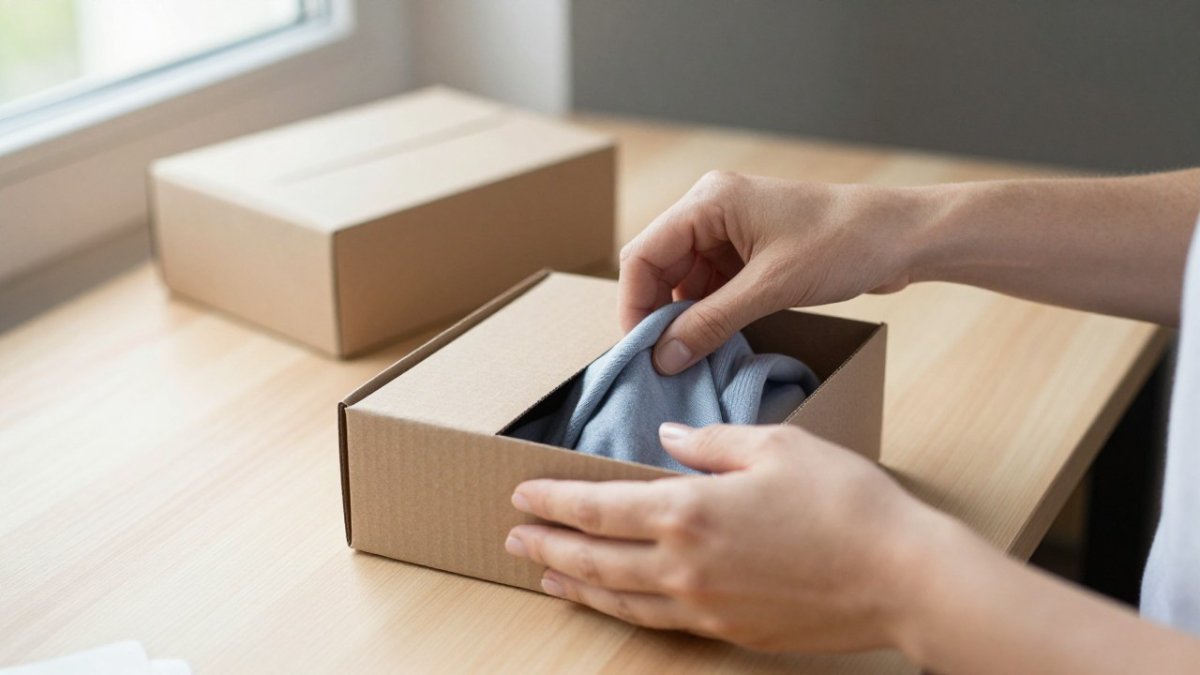
- Hands opening the packaging for the first time
- A close-up of the texture, fabric, or finish at macro distance
- The product in use, shot from the user's point of view
- A before-and-after pair filmed from the same tripod position
- A demonstration of the one feature buyers always ask about
- A scale shot with a hand or a familiar object beside the product
A common mistake is filming all of these wide. Get close.
Lifestyle, Behind-the-Scenes and Service Preparation
Lifestyle footage puts the product in a real context. Behind-the-scenes footage builds trust in a way no studio shot can.
Service preparation is the underrated one. Film the work itself where it makes sense: the packing bench, the stockroom, the team at work.
- Employees at work, filmed candidly rather than posed
- Natural interactions between staff and customers
- Candid moments that show the process, not the polish
These clips read as honest. Honest footage converts better than glossy footage when the buyer is comparing two similar stores.
Building a UGC Ad B-Roll Shot List Around the Script
A UGC ad B-roll shot list should be built backwards from the script. Write the voiceover first, then list one visual for every line that needs proof.
A workable workflow for a shoot looks like this:
- Lock the script. One hook, one problem, one proof, one offer.
- Mark proof lines. Every claim gets a shot beside it.
- Write the shot list in order. Number each shot and note the duration.
- Add two spare shots per scene. Editors need options.
- Note the format. Vertical first, square and landscape second.
A simple shot list template:
| Shot # | Script line | Visual | Framing | Duration |
|---|---|---|---|---|
| 1 | Hook | Product in hand, mid-action | Close-up, vertical | 2s |
| 2 | Problem | Empty or worn alternative | Medium | 2s |
| 3 | Proof | Demonstration of the feature | Close-up | 4s |
| 4 | Result | Product in real use | Wide | 3s |
| 5 | Offer | Pack shot with price card | Static | 2s |
Keep the list to one page. If you need creator rates to budget the shoot, our breakdown of UGC pricing in 2026 covers creator tiers and agency retainers side by side.
How to Shoot B-Roll for TikTok Ads and Vertical Placements
To shoot B-roll for TikTok ads, film vertical from the start and frame for a small screen. Cropping landscape footage later loses resolution and composition, and paid placements punish that loss because the ad is judged on a phone in a feed, not on a monitor in an edit suite.
Set up for 9:16 before the first take. Then shoot every scene three ways: wide, medium, close. The wide gives the editor an establishing frame, the medium carries the action, and the close gives the hook a texture shot to cut against.
Platform Specifications and Safe Zones for Paid Placements
Paid social placements do not share one frame.
A practical shooting rule is to compose for the tightest crop first.
Safe zones matter more than aspect ratio. Every major paid placement overlays its own interface on the creative: profile name, caption, call-to-action button, progress bar, and sometimes a shop or profile link.
Captions are not optional. Keeping clean plates also makes it easier to adapt the same footage across deliverables, so account for that flexibility when pricing an AI UGC retainer.
Angles, Framing and Camera Movement That Survive a Small Screen
Angles and framing that survive a small screen follow three rules: fill the frame, move slowly, and keep the subject centred.
- Fill the frame. Leave less empty space than feels comfortable.
- Move slowly. Fast pans turn to mush on a phone.
- Use a tripod for static shots and a gimbal for movement.
Watch out: handheld footage shot without stabilisation looks fine on a laptop and unwatchable on a phone. Check every clip on a handset before you leave the set, inside the actual placement frame rather than in a gallery viewer.
Placement-Specific Shot Planning
Different paid placements reward different B-roll. Plan the shot list around where the clip will run, not around what looks good in isolation.
- TikTok in-feed: open on motion in the first frame, shoot vertical, and plan a hook shot that reads without sound.
- Meta feed and Reels: shoot 4:5 and 9:16 versions of the same scene; the feed slot is less forgiving of empty edges than Reels.
- Stories and short vertical placements: keep the subject centred and leave the top and bottom clear for UI and captions.
One approach is to shoot one master scene and re-frame it on set rather than in the edit.
For platform specs on safe zones and aspect ratios, see the Meta Ads Guide.
Short-Form Video Ad Creative Best Practices for Testing and Measurement
Short-form video ad creative best practices come down to one habit: test one variable at a time. Change the hook, keep the body. Change the B-roll, keep the hook. If two things change at once, you learn nothing about either.
The variables worth testing, in order:
- The first two seconds
- The B-roll used under the hook
- The order of proof shots
- The offer frame at the end
The Metrics That Tell You Whether B-Roll Is Working
Clicks and conversions alone will not tell you whether a B-roll variant is doing its job. The useful signals sit earlier in the funnel:
- Hook rate: the share of impressions that survive the first few seconds. A weak opening B-roll shows up here first.
- Thumb-stop rate: how often viewers pause or slow down on the ad. Motion, texture, and a clear subject drive this.
- Watch time and completion rate: whether the B-roll under the body holds attention past the hook.
A common pattern is a variant with a strong hook rate and a weak completion rate. That usually means the opening B-roll is doing its job and the middle proof shots are not. The fix is a B-roll swap, not a new script.
A Practical Creative-Testing Workflow
A test is only useful if you can trace a result back to a specific clip. Build the workflow around that trace.
- Name every clip with a consistent ID before it enters the edit.
- Build variants that differ by one clip or one hook, not by several.
- Run each variant long enough to clear the platform's learning phase before judging it.
- Log the clip ID, the variant, and the metric that moved.
- Retire losing clips and promote winning ones into the next shoot brief.
Keep a log. Note which clip ran in which variant and what happened. If you want a method for tying creative variants to sales rather than clicks, read our guide to measuring creative testing's impact on sales.
Message Match Between B-Roll and Landing Page
The B-roll in your ad sets an expectation the landing page has to meet. If the ad opens on a close-up of a fabric texture, the page should show that texture above the fold; if the ad shows a demonstration, the page should repeat the same proof.
Our guide to aligning ad messaging with landing pages walks through that handoff step by step.
Filming Logistics, Permits and Usage Rights in Ljubljana
Filming logistics in Ljubljana are manageable if you plan the paperwork before the shoot day. Filming in public spaces may need permission from the city, and some locations have their own rules.
Practical points for a Ljubljana shoot:
- Public spaces: ask the City of Ljubljana about filming permits before you book crew
- Private venues: get written permission from the owner, even for a short session
- People on camera: get a signed release from everyone who appears
For rules on filming in public areas, check the City of Ljubljana official site. For personal data and consent when filming people, the Slovenian Information Commissioner publishes guidance. For platform specs on safe zones and aspect ratios, see the Meta Ads Guide.
If you would rather hand the whole shoot to a team, our performance creative service covers static ads, UGC, video and B-roll on a fixed monthly output. Agencies that need extra capacity can use our white label ad creative under their own name.
Book a Free Creative Audit Before Your Next Shoot
A free creative audit is the fastest way to find out why your current ads stall.
Conversion Design is trusted by more than 200 DTC and ecommerce brands and operates across 30 markets.
Get started with Conversion Design and turn your next shoot into footage that actually sells.
Filming good B-roll is not the hard part. Connecting it to a store that converts is.
Frequently Asked Questions
What is B-roll in a paid social ad?
B-roll is the supplementary footage cut around your main talking-head or voiceover track: product close-ups, hands in use, lifestyle scenes and behind-the-scenes shots. In a paid social ad it carries the visual proof, so the viewer sees the product working instead of only hearing about it. A-roll delivers the argument, B-roll shows the evidence. Because most feeds autoplay without sound, that evidence is often what keeps someone watching past the first two seconds.
How much B-roll do you need for a short-form ad?
Plan for more usable B-roll than the finished edit needs, so a single shoot day can produce coverage for several ad variations. Shoot each product moment from two or three angles, add a wide and a tight version, and capture clean transitions.
How can one B-roll shoot work for multiple ad variations?
Build a UGC ad B-roll shot list that separates product shots, lifestyle footage and hands-in-use clips into reusable groups, then film each group in a consistent light and setting. Keep the camera locked for some takes and moving for others. In editing, pair the same footage with different hooks, voiceovers and captions to produce multiple ad variations. A common approach is to test the hook and the edit rather than commission a new production each time.
Do you need permits to film B-roll in Ljubljana?
It depends on where you shoot. Private studios, offices and retail interiors need the owner's permission, and anyone recognisable on camera should sign a release. Public spaces, drone use and larger crews can require permission from the city or other authorities, so confirm the rules for your specific location before the shoot day. For most ecommerce B-roll, a controlled indoor set with signed releases and licensed music avoids the issue entirely.