
Table of Contents
- What Custom Theme Development Services Deliver in 2026
- Custom Theme Development Best Practices 2026
- Shopify Plus Custom Theme Development Costs: What to Budget
- Key Capabilities: Performance, Security, and Scalability
- How Custom Themes Solve the Page Builder Problem
- What Separates Competent Agencies from Exceptional Partners
- Conclusion: Making the Case for Custom Theme Investment
- Frequently Asked Questions
Last Updated: September 23, 2026
What Custom Theme Development Services Deliver in 2026
Custom theme development services have evolved from a luxury add-on into a competitive necessity for scaling e-commerce brands. The difference between a templated store and a custom-built one isn't just aesthetic, it's measurable in conversion rates, page load times, and customer lifetime value.
When managing millions in annual revenue, generic themes create friction: slow mobile checkouts, inflexible product displays, integration gaps between your CRM and storefront, and missed personalization opportunities that cost real revenue.
Custom theme development services give you pixel-perfect control over architecture, performance, and user experience without fighting pre-built limitations.
The real question isn't whether you need custom theme development services, it's whether you can afford not to have them at scale.
Custom Theme Development Best Practices 2026
Full Site Editing and Block-Based Architecture
Headless WordPress Integration for Modern Frontends
Performance Optimization as Architecture, Not Afterthought
Build performance into architecture, not as an afterthought. Lazy-load heavy elements, implement image optimization, and build caching strategies into the theme. A well-architected custom theme should achieve high Lighthouse scores on mobile without post-launch optimization.
Security Hardening in the Foundation
Build security into architecture: validate all form inputs, escape dynamic content, and conduct regular security audits. Your custom theme should follow security best practices so rigorously that audits find nothing to fix.
Responsive and Mobile-First Development
Develop mobile-first: write CSS with min-width media queries, test on real devices (not emulators), optimize checkout for 4G networks, and use flexible layouts (CSS Grid, Flexbox) that adapt naturally to different screen sizes.
Version Control and Deployment Pipelines
Professional custom theme development services require Git-based workflows, automated testing on every commit, staging environments mirroring production, zero-downtime deployments, and automated rollback capability.
Shopify Plus Custom Theme Development Costs: What to Budget
Custom theme development services for Shopify Plus stores depend on scope complexity, integration requirements, design fidelity, and maintenance expectations. Agencies structure pricing as either project-based (for well-defined scopes) or dedicated teams (for continuous optimization).
Key cost drivers: integration complexity (ERP, CRM, subscription platforms add weeks), design-to-code fidelity (custom animations and micro-interactions take longer), performance optimization (caching, CDN, image optimization require expertise), and testing/QA (should consume 20-30% of timeline). Agencies skipping QA cut corners that cost you later.
| Service Component | Typical Investment Range | What's Included |
|---|---|---|
| Custom theme architecture & build | Substantial | Clean code, responsive design, performance optimization |
| System integrations (ERP/CRM/payment) | Variable | API development, data mapping, error handling |
| Performance optimization | Included | Core Web Vitals optimization, caching strategy |
| Security hardening | Included | Input validation, output escaping, security audit |
| Ongoing maintenance | Separate | Bug fixes, updates, performance monitoring |
Agencies offering rock-bottom pricing for custom theme development services cut corners on code quality or plan upsells later. Expect to pay for expertise and quality execution.
Key Capabilities: Performance, Security, and Scalability
Performance, security, and scalability form the foundation of any custom theme. Performance starts with architecture: lazy loading, efficient caching, and minimized render-blocking resources. A one-second delay costs 7% of conversions. Scalability requires database query optimization, CDN asset delivery, and caching layers to handle thousands of products and peak traffic without breaking.
Security in custom theme development services means treating your storefront as a critical business system: proper authentication, input validation, output escaping, CSRF protection, regular audits, and PCI DSS compliance. Accessibility (WCAG standards) should be built in from the start: semantic HTML, proper heading hierarchy, keyboard navigation, color contrast, and screen reader compatibility. Accessible themes perform better in search rankings and serve a broader customer base.
How Custom Themes Solve the Page Builder Problem
Page builders promise flexibility but can lead to bloated code, performance penalties, vendor lock-in, and false control. Custom theme development services can address these issues at scale.
Page builders can create multiple problems: bloated markup, vendor lock-in, maintenance risk, and scalability ceilings.
The Migration Path: From Page Builder to Custom Blocks
This is where custom theme development services add immediate, measurable value. Rather than a complete site rebuild, a strategic migration can move your best-performing pages from the page builder to custom blocks, one section at a time.
Phase 1: Audit and Prioritize, Audit existing pages to identify high-traffic, high-converting pages for migration first. Analyze page builder markup to identify the features you actually use, then plan custom blocks to replace them. Streamlining this technical debt ensures that your architecture remains scalable as you transition toward robust Shopify Plus solutions to support complex enterprise requirements.
Phase 2: Build Custom Blocks for Your Actual Use Cases, Build only the blocks you actually need (testimonial slider, product carousel, custom form). Each custom block should render clean semantic HTML, include editor settings, support responsive design natively, and load only necessary JavaScript.
Phase 3: Zero-Downtime Migration, Build custom theme in staging, migrate high-priority pages, deploy to production with old pages intact, then gradually redirect. This phased approach lets you measure real-traffic impact and prove ROI before migrating more pages.
Phase 4: Ongoing Optimization
Once pages are on custom blocks, optimization becomes easier and faster. You can:
- A/B test layout variations without rebuilding pages
- Implement performance improvements (lazy loading, image optimization, caching) at the block level
- Add new functionality (personalization, dynamic content, conditional rendering) without touching the page builder
- Maintain clean code that other developers can understand and improve
The Performance Difference: Real Numbers
Custom themes can significantly reduce the amount of CSS and JavaScript loaded. Combined with optimized images and caching, you're looking at:
- Page load time improvement.
- Core Web Vitals improvement.
- Conversion rate improvement.
For a store doing significant annual revenue, a conversion rate improvement can lead to substantial additional revenue. The custom theme investment can pay for itself.
When to Migrate vs. When to Stay
Not every business should migrate away from page builders immediately. Consider staying with a page builder if:
- Your site is small (under 50 pages) and changes frequently
- You have no technical team and can't maintain custom code
- Your performance and conversion metrics are already strong
- You don't need custom integrations or functionality
Migrate to custom blocks if:
- Your site is large and complex (100+ pages, thousands of products)
- You need custom integrations (ERP, CRM, subscription platform, inventory system)
- Performance is a competitive factor in your industry
- You're doing serious revenue and need to optimize conversion rates
- You want long-term flexibility without vendor lock-in
What Separates Competent Agencies from Exceptional Partners
Not all custom theme development services are created equal. The difference between competent and exceptional agencies shows up in code quality, communication, and results.
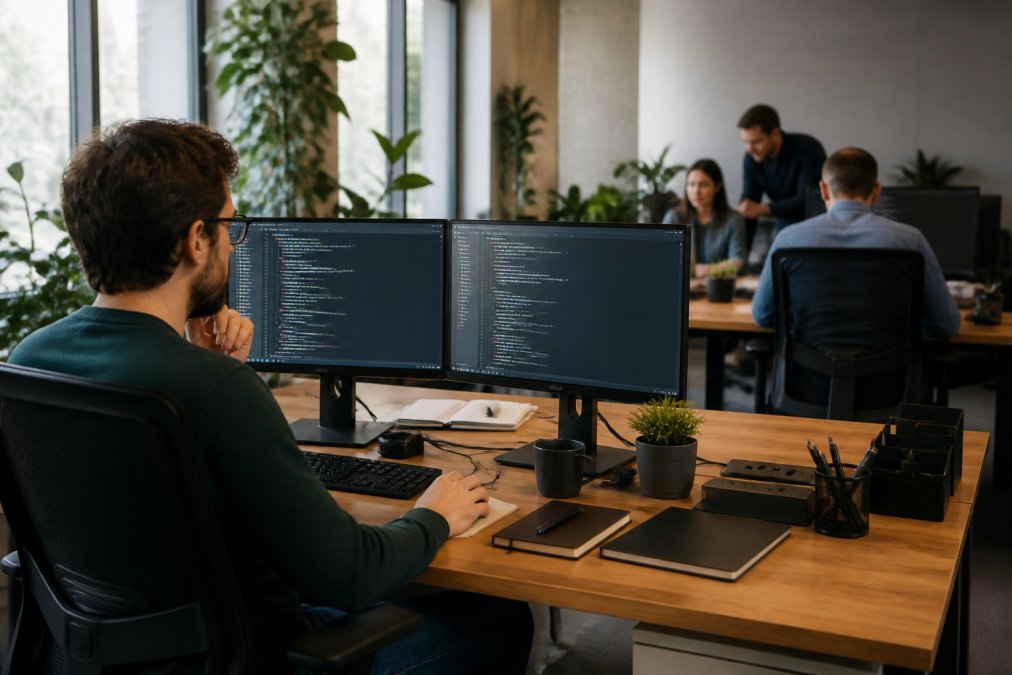
Exceptional agencies treat your project like their own business.
Conclusion: Making the Case for Custom Theme Investment
Custom theme development services require a genuine investment. But for scaling brands, the ROI can be undeniable. Improved conversion rates, faster page loads, seamless integrations, and friction-free checkout experiences compound into significant revenue gains.
Frequently Asked Questions
What should I look for in a custom theme development agency in 2026?
Prioritize agencies with proven expertise in Shopify Plus, demonstrated understanding of Core Web Vitals and mobile-first design, and a track record of zero-downtime migrations. Look for partners who conduct CRO audits before development, integrate cleanly with your ERP and CRM systems, and offer fixed-scope pricing to avoid budget surprises. Senior-level developers matter more than team size, verify their experience with custom theme architecture if you plan future scalability.
How does AI impact custom theme development services?
AI accelerates repetitive coding tasks and code review cycles, but cannot replace strategic architecture decisions or conversion optimization. Smart agencies use AI to speed up testing and deployment pipelines, automate accessibility checks, and generate boilerplate code, freeing senior developers to focus on custom functionality, performance tuning, and business logic. The real value comes from human expertise directing AI tools toward your specific conversion goals, not from AI replacing the development process.
Why should we choose custom theme development over pre-built templates?
Custom themes eliminate bloat, reduce page load time, and can remove technical debt from third-party page builders. Pre-built templates carry code for features you don't use, making them slower and harder to maintain. Custom development gives you full control over site architecture, API integrations, and conversion workflows, critical for DTC brands scaling to high traffic. You avoid vendor lock-in and can adapt your theme as your business evolves without rebuilding from scratch.
How long does a custom theme development project typically take?
Timeline depends on scope, but most mid-market Shopify Plus migrations run 8-16 weeks from audit to zero-downtime cutover. Discovery and CRO audit take 2-3 weeks. Theme development and system integration take 6-10 weeks. Testing and optimization add 1-2 weeks. Fixed-scope agencies front-load the planning phase to avoid scope creep and delays. Expect longer timelines if you're migrating from a page builder or integrating multiple third-party systems.
What are the performance benefits of custom theme development?
Custom themes typically improve page speed, reduce Core Web Vitals issues, and optimize mobile conversion flows. You eliminate render-blocking code, unused CSS, and bloated JavaScript libraries that page builders include by default. Better performance directly improves SEO rankings, reduces bounce rate, and increases conversion rates. Custom development also enables advanced features like real-time personalization, dynamic pricing, and seamless checkout, capabilities that pre-built themes struggle to deliver without performance penalties.